

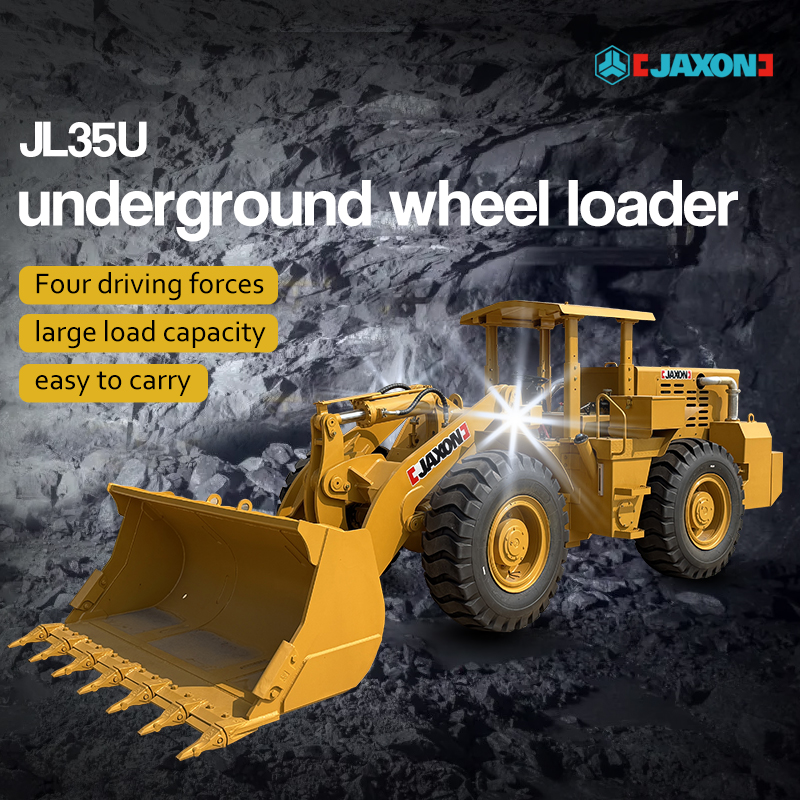
The working principle of an Underground loader, particularly a Load-Haul-Dump (LHD) machine, involves a combination of mechanical, hydraulic, and electrical systems working together to perform tasks such as loading, hauling, and dumping materials. Here’s a detailed explanation of how these systems interact to make the underground loader operate efficiently:
Key Components and Their Functions
Power Source:
Diesel Engine or Electric Motor: Underground loaders are typically powered by diesel engines or electric motors. Diesel engines provide high torque and mobility, making them suitable for large-scale mining operations. Electric loaders are more environmentally friendly and are often used in underground mines where ventilation is a concern.
Hydraulic System:
The hydraulic system is crucial for powering the movement of the loading bucket, steering, braking, and lifting. It consists of pumps, valves, cylinders, and hoses that work together to transmit fluid pressure and control the movement of the loader's components. For example, when braking, the vehicle's kinetic energy can be converted into hydraulic energy and stored in an accumulator for later use in the steering or braking system.
Loading Bucket:
The loading bucket is the primary tool used for scooping and transporting materials. It is attached to the front of the loader and can be hydraulically controlled to lift, lower, and tilt. The size and capacity of the loading bucket vary depending on the specific model and application of the loader.
Drive System:
The drive system propels the LHD loader forward and backward. It typically consists of a transmission, axles, and wheels or tracks. The type of drive system used depends on the terrain and operating conditions of the mining site. For example, wheeled loaders are more suitable for hard and flat surfaces, while tracked loaders offer better traction and stability on rough and uneven terrain.
Operator Cab:
The operator cab is designed to provide a comfortable and safe working environment, with features such as air conditioning, ergonomic seating, and easy-to-use controls. The operator cab is also equipped with various instruments and displays to monitor the performance and status of the loader.
Working Principle
Loading: The loader uses its bucket to scoop up materials from the ground. The hydraulic system controls the movement of the bucket, allowing it to lift and tilt as needed.
Hauling: Once the bucket is loaded, the loader transports the materials to the designated area. The drive system propels the loader, and the hydraulic system ensures smooth and controlled movement.
Dumping: Upon reaching the dumping area, the hydraulic system tips the bucket to unload the materials. The loader then returns to the loading area to repeat the process.
Innovative Features
Energy Recovery Systems: Some modern underground loaders incorporate energy recovery systems that capture and store kinetic energy during braking. This energy can be reused to power the loader's hydraulic systems, improving efficiency and reducing fuel consumption.
Remote Control and Automation: Advanced loaders can be equipped with remote control capabilities and automated systems, allowing operators to control the machine from a safe distance and improving overall safety and efficiency.
In summary, the working principle of an underground loader involves a coordinated effort between its power source, hydraulic system, loading bucket, drive system, and operator cab to efficiently load, haul, and dump materials in underground mining environments.
995 Green Hill St. Greenfield, IN 46140
1-800-1234-567
mail@demolink.org
995 Green Hill St. Greenfield, IN 46140
1-800-1234-567
mail@demolink.org
Search
Copyright © 2022 Laizhou Keman Heavy Industry Machinery Co., Ltd
Энэ вэб сайт нь таныг манай вэбсайтаас хамгийн сайн туршлагыг олж авахын тулд күүки ашигладаг.
 English
 Español
 Portugues
 Pусский
 Français
 Italiano
 Türk dili
 हिन्दी
 Tiếng Việt
 中文
中文 қазақ
қазақ עִברִית
 မြန်မာ
 українська
 беларускі
 ພາສາລາວ
 o'zbek
 Kikongo



 Whatsapp
 Утас
Утас
Сэтгэгдэл
(0)